Yellow leaves
Narrow down the common causes instead of automatically reaching for fertilizer.
The Retired Gardener’s Garden Fix Manual
A practical troubleshooting manual that helps backyard gardeners narrow down yellow leaves, wilting, root trouble, pests, poor flowering, tomato problems, rose problems and more, without trying one treatment after another.
Instant PDF download • One-time payment • Print-friendly
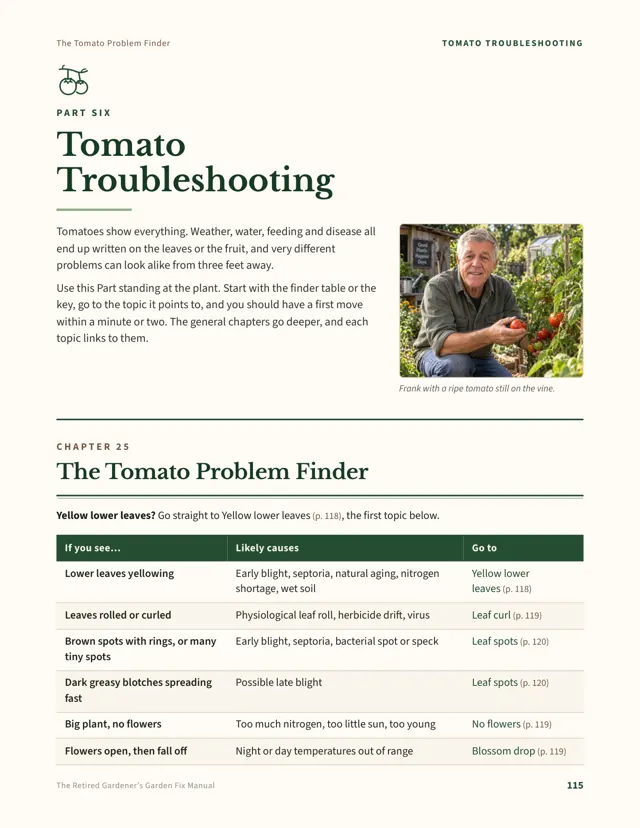
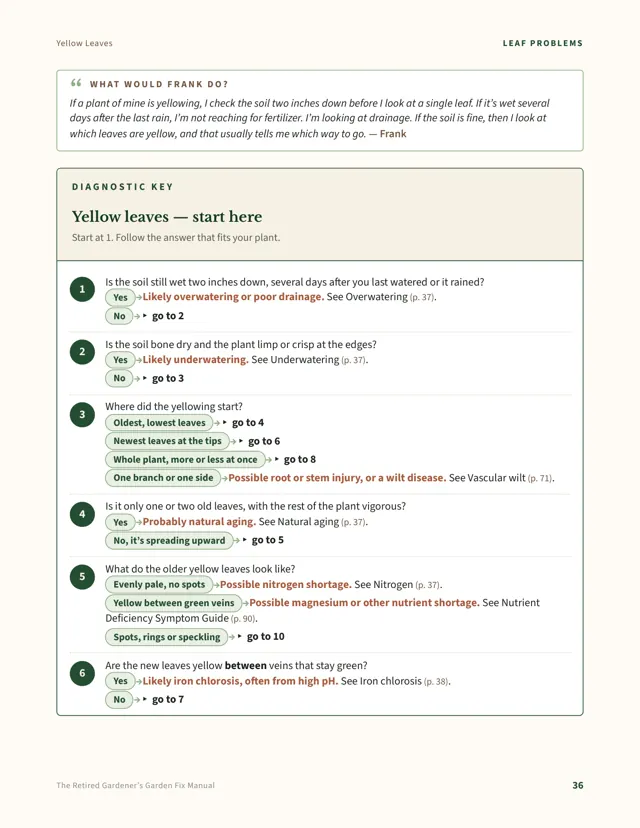
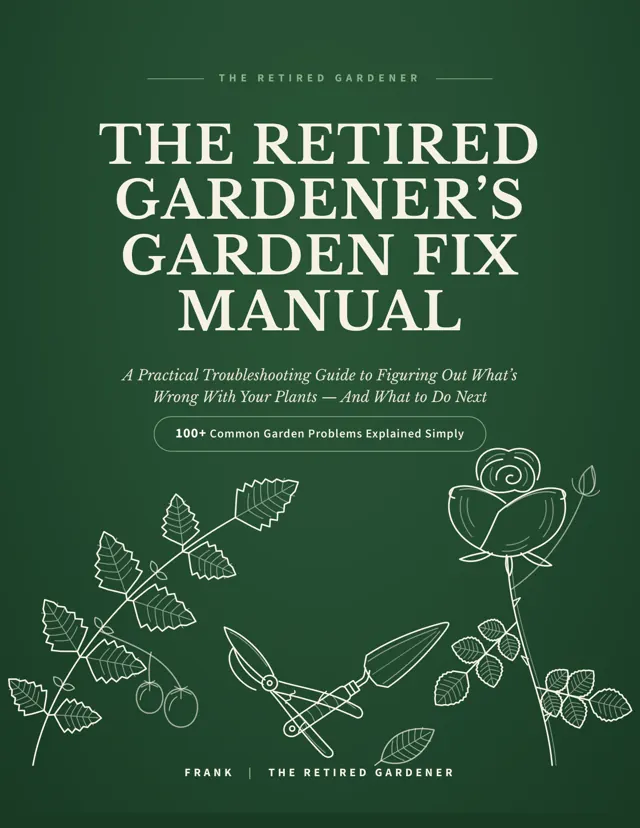
Digital manual · 235 pages · US Letter, printable
457 pages of university Extension & government guidance checked
Real pages shown below, not a mystery ebook
Instant download after checkout, handled by Gumroad
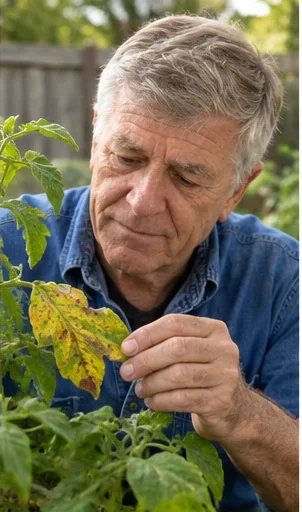
You notice the leaves on your tomato turning yellow. So you look it up.
why are my tomato leaves turning yellow
Five answers, and they can’t all be right. So you try one. Then another. Then a spray somebody recommended in the comments.
A yellow leaf is a symptom, not a diagnosis. Treat the wrong problem and you can easily make the plant worse.
You don’t need to panic. You need a process.
Most gardeners don’t need another product
One symptom. Several possible causes.
The Garden Fix Manual shows you how to narrow them down before you reach for a treatment. Diagnose first. Treat second.
One-time payment • Digital manual
Over the years I noticed that most gardeners weren’t struggling because they didn’t care for their plants. They were struggling because symptoms overlap.
Wilting can mean dry soil. It can also happen when roots are sitting in soil so wet they can’t take up water. Yellow leaves can mean several completely different things.
So instead of another book that teaches you how to garden from page one, I wanted something you could open when a plant looks wrong. Find what you’re seeing. Check a few things. Know what to do first.
— Frank, The Retired Gardener

Open it when something looks wrong. Three steps.
The Master Symptom Finder lists 46 things you can actually see, by leaf color, leaf shape, damage, whole plant, flowers, fruit and roots.
“Yellow leaves.”
A numbered key asks the questions that separate one cause from another.
Each chapter puts the safest first move ahead of any product, and says plainly what not to do, so you don’t make things worse while you work it out.
See inside
These are actual pages from the manual. Tap any page to see it full size.
Example from the manual
Both can make a plant wilt. Here’s part of the comparison the manual walks you through.
| Check | Too much water | Too little water |
|---|---|---|
| Soil, two inches down | Stays wet days after watering | Dry and crumbly |
| Leaves | May yellow and go soft | May crisp and curl |
| Roots | Can turn dark and mushy | Dry, but usually firm |
| The plant | Wilts even though the soil is wet | Wilts, then perks up after a deep watering |
That’s why the manual’s first rule for a wilting plant is check the soil before you reach for the hose.
Narrow down the common causes instead of automatically reaching for fertilizer.
Why dry soil and waterlogged roots can look almost the same, and how to tell which you have.
Use the shape and place of the damage to narrow down what’s eating the plant.
Blossom-end rot, curling leaves, cracking, poor fruit set, leaf spots and more.
Poor blooming, black spot, yellowing, pests, and why rose cuttings fail.
Drainage trouble, root rot, root-bound plants and the watering mistakes behind them.
N-P-K, deficiency signs, fertilizer burn and soil pH, without the chemistry class.
Why cuttings rot, dry out, or sit there for weeks refusing to root.
One-time payment • Digital manual
Instant download • One-time $27 payment
235 pages · 17 parts · 44 chapters
Plus a Master Symptom Finder, a Plant Finder, an emergency procedure, an index, and a list of the sources behind the advice.
Instant download • One-time $27 payment
Fifteen pages are laid out to print on their own, one sheet each. Keep them in the shed, by the potting bench, in the greenhouse or in a gardening binder.
All fifteen are included in the manual
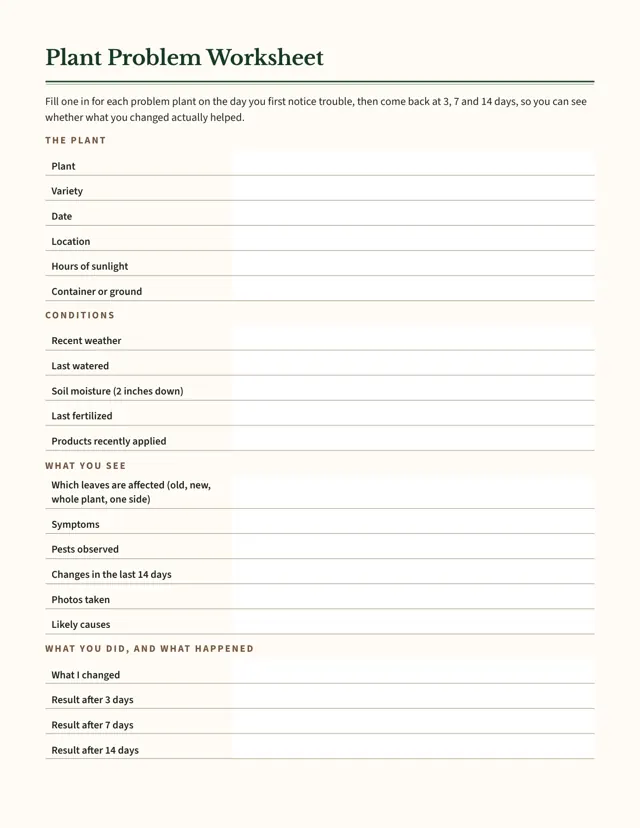
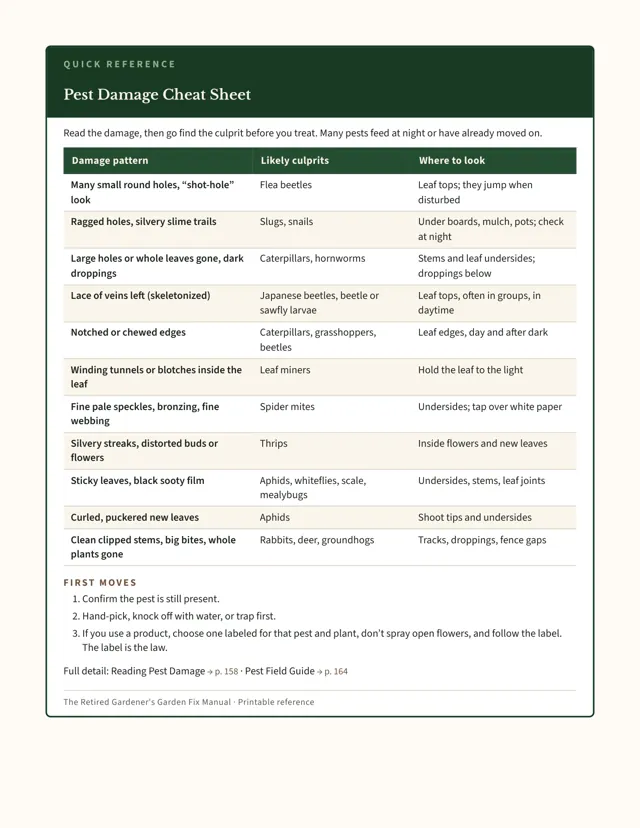
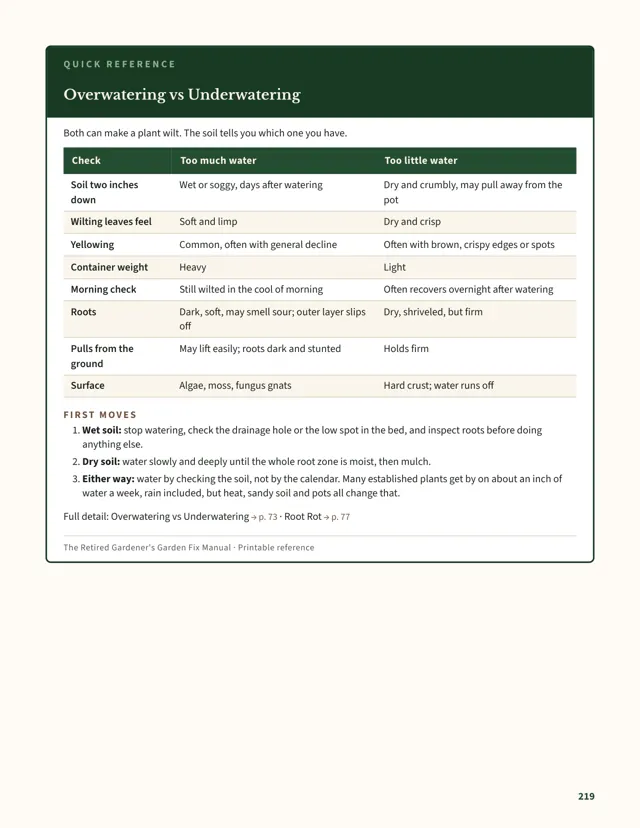

A bag of fertilizer the plant didn’t need. A spray for a pest that wasn’t there. A second product when the first one didn’t work. A replacement plant.
None of that is dramatic on its own. It adds up because the guessing starts over every time something looks wrong.
This isn’t something you use once. It’s one place to start every time a plant looks wrong, season after season.
$27
One-time payment.
No subscription.
Digital manual • Print-friendly

Already an experienced gardener? It works as a reference, not a beginner’s course. Just starting out? Everything is in plain language, with step-by-step checks.
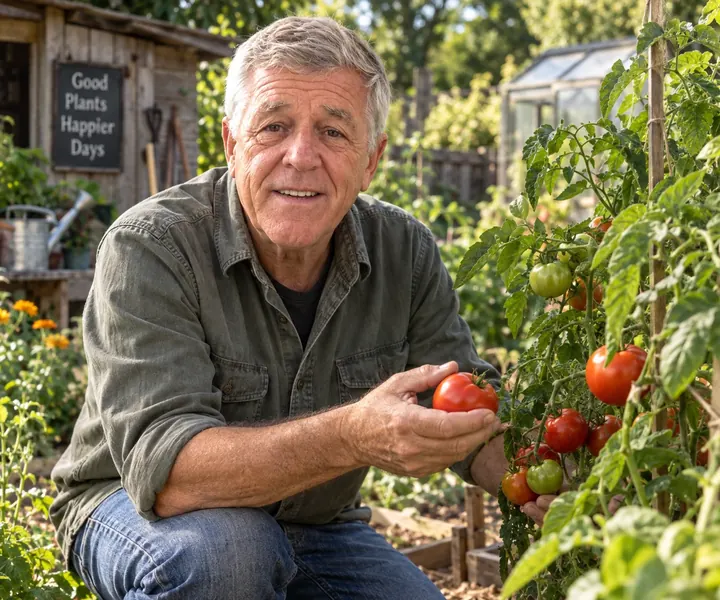
From Frank’s garden
The habits behind every chapter of the manual.





Instant download • One-time $27 payment

One thing gardening teaches you is that plants rarely read the rule book. Two plants can show the same symptom for completely different reasons.
That’s why my first question is almost never “What should I put on it?” It’s “What changed?” Did it rain for a week? Did I move it? Did the neighbor spray his lawn?
I put this manual together so you can ask those questions in a sensible order, rule out the common causes, and only then decide what to do. Most of the time the fix is simpler than the product aisle would have you believe.
— Frank

Popular gardening advice changes constantly. The manual takes a more careful approach: look at the symptom, consider several possible causes, and make sensible checks before treating.
Its horticultural advice was checked against published guidance from university Cooperative Extension services and other horticultural references. It includes a section listing the sources behind the advice, so you can read further. No university or agency has reviewed or endorsed the manual.
When it talks about a product, it names the type and tells you to follow the label. It never gives a homemade spray recipe.
Instant download • One-time $27 payment
No. It’s a digital PDF manual. Checkout is handled by Gumroad, and you can download the PDF right after you pay. Nothing is shipped.
Yes. It’s laid out on US Letter pages for home printers, and fifteen reference pages are designed to be printed one sheet at a time.
No. It covers vegetables, flowers, roses, hydrangeas, shrubs, common ornamentals, propagation, pests, diseases, roots and general plant troubleshooting.
Yes. Technical ideas are explained in plain language, and each problem is worked through with simple checks in order.
It’s a reference, not a course. You open it at the problem you have, not at page one.
You can, and some of it is good. What you don’t get online is a structured process in one place: the same checks, in a sensible order, for every problem, without five sites telling you five different things.
No. Many plant problems have overlapping symptoms. The manual helps you narrow the possibilities and decide what to check next. Some problems still need a lab or your local Extension office, and it tells you when.
Yes. Tomatoes have their own section: a Tomato Problem Finder, a diagnostic key and a one-page emergency checklist.
Yes, including why roses don’t bloom and why rose cuttings fail.
Yes. Coffee grounds, eggshells, banana peels, Epsom salt, cinnamon, baking soda, vinegar, hydrogen peroxide, wood ash, milk, rice water, aspirin and honey are each examined for when they might make sense and when they can cause trouble.
No. It’s a one-time $27 payment.
Yes, it opens on phones, tablets and computers. The pages are laid out for printing, so a tablet or computer is the most comfortable screen for reading.
The manual gives general troubleshooting guidance that applies across the US. For region-specific questions, such as planting dates or local pests, it points you to your local Extension office.
One-time payment • Digital manual
Open the manual. Find the symptom. Follow the checks. Make the next decision with more confidence.
Garden problems don’t wait while you search five websites. Have the manual on hand before the next yellow leaf shows up.
$27
One-time payment
Digital gardening reference manual
Digital manual · 235 pages